Wednesday, February 20, 2013

[Wren Song] 90 Article The Travelling Wildflife Gardener


What a week! I think I had a very successful talk at the Longwood Gardens Today’s Horticulture Symposium on Friday. I got a lot of positive feedback from both the conference organizers as well as many audience members.

I also got to meet for the first time in person my team member Suzanne Dingwell. I’ve known her for years “online” but it was so exciting to get to spend some time with her during this conference.

And I shared a wonderful lunch with one of my biggest fans, Damon Morris and other members of the Mount Cuba Center staff. All in all a wonderful day!

I’m getting ready for my grand birding adventure in Trinidad and Tobago, such an exciting way to spend my 20th anniversary, but this week I also got invited to participate in a FAM tour to Guatemala, another wonderful birding adventure in such a beautiful place! (A FAM tour is when the tourist bureau or other organizations bring you to their country to familiarize you with the many wonderful things to see so that you’ll help to promote them).

This particular tour will be led by some of the best birders in Guatemala where I’ll get to see many of “our” birds in their winter habitats, as well as get to know many of the gorgeous birds who reside in Guatemala year round. I am so excited! Two tropical birding vacations in less than a month. Yippee!!!

And many, many thanks to the nature angels who have donated so many wonderful books and other supplies to the classroom I’ve adopted to teach them about birds, nature, and other wildlife. You have truly blessed my life as well as enriched the lives of the students in my class (an inner city 4th through 6th grade special assistance classroom who have very few resources for learning. Thank You!!!

By Carole Sevilla Brown
From the Ecosystem Gardening Website

The Prairie Ecologist Article: Thank Goodness for Boxelder Bugs


By Chris Helzer The Prairie Ecologist

I finally broke down and bought a close-up flash system for my camera.  Until now, I’ve just relied on natural light to illuminate the flowers, insects, and prairies I photograph.  However, during the last couple years, I’ve been weakening, and looking at recent images from people like Clay Bolt and Piotr Naskrecki finally pushed me over the edge.  After considerable wandering about in the world of internet photography websites and equipment reviews, I am now the owner of a Nikon R1 Wireless Close-up Speedlight Kit. (Say THAT five times fast!)

Here’s my next problem:  Now that I’ve got a flash system to help me get better close-up insect photos, where am I supposed to find an insect to photograph during the middle of February in Nebraska??

Enter the friendly neighborhood boxelder bug…


A boxelder bug captured on my front porch and photographed in my kitchen.

I’m sure I’m not the only one who has been seeing boxelder bugs around their house this winter.  It seems there are always a couple of them nearby - soaking up some sun by the window or reading over my shoulder at by the desk.  Sure enough, as soon as I got the new flash assembly hooked up and ready to test, I was able to find one boxelder bug in the kitchen and another out on the front porch.  (You can tell which is which in the photos because the bug from outside is covered in dust.)


The other boxelder bug – less dusty – that I found in my kitchen.

Boxelder bugs are considered by many people to be pests, but that’s not a completely fair characterization.  Sure, they suck the juices out of leaves and the developing seeds of boxelder and maple trees, but they don’t siphon enough out to actually hurt the trees.  Yes, they can congregate in large numbers on the sunny sides of houses, but they’re not doing any actual damage there.  Also, while they are happy to spend the winter in cozy crevices around your house, they don’t eat anything during that time, and can make themselves available on short notice should you have the urge to try some wintertime insect photography in your kitchen.


As the photo shoot went on, the boxelder bugs and I got more creative in our portrait compositions.  (Also, this one didn’t want to hold still.)

The species of boxelder bug in my neighborhood is the Eastern Boxelder Bug (Boisea trivittata), which is found throughout most of the United States east of the Rocky Mountains, as well as in some western states, parts of southern Canada, and even Central America.  Boxelder bugs are “true bugs”, meaning they are members of the taxonomic order Hemiptera, along with other bugs such as stink bugs, plant bugs, cicadas, and many other insects that have piercing/sucking mouth parts.  Like many other true bugs, boxelder bugs also have a characteristic triangle between the tops of their wings (as opposed to beetles, in the order Coloeptera, which have hardened forewings that form a hard shell on their back when they’re not flying.)


They’re even cuter from the front, aren’t they?

One of the endearing qualities of boxelder bugs is that they can release bad-smelling/tasting chemicals to discourage predators.  Like many other insects with similar capabilities (monarch butterflies and long-horned milkweed beetles, for example), they have bright orange or red markings to warn predators off.  That defense mechanism may be why boxelder bugs feel comfortable hanging around – often in large crowds - in plain sight, while most other insects work hard to stay hidden.  


Last shot.  Note the small eyes behind each of the main eyes.  Those smaller eyes are ocelli, or simple eyes, that (we think) can discriminate only between light and dark.  Their function is still a topic of debate among entomologists.

I understand that many of you won’t ever become fans of boxelder bugs.  I guess I can live with that, and – with the exception of those you squish – so can the boxelder bugs.  Personally, I like them.  As with every other insect species I know of, they have an fascinating life story, and they’re just trying to make their way through life like the rest of us.

Plus, they make very accomodating photo subjects in the dead of winter.

Photography notes for those of you who care…  These photos were all taken with the “standard” set-up of the R1 system, with two speedlight flashes, mounted at “9 and 3″ at the front of my Nikon 105mm macro lens.  I had an 8mm extension tube on for all but the second photo shown here.  The bugs were photographed walking around on the white plastic (acrylic?) diffuser that came with the flash system.  All these shots were hand-held at 1/250 sec exposures.  I’m looking forward to using this flash system outside, so I can capture images of insects, flowers, and other small things when the available natural light isn’t quite as good as I might want.  We’ll see how that goes.


Thursday, February 14, 2013

Wildlife Diversity News A Publication of the Iowa DNR Wildlife Diversity Program Perfect Day in the Field


Edited by Erica Eaves
Wildlife Diversity News

A Publication of the Iowa DNR Wildlife Diversity Program
Perfect Day in the Field

It was a gorgeous day to be outside, especially for August. Yesterday it was 100 degrees in the shade, and the day had been spent near the southern border of Iowa searching for evidence of nesting birds for the Breeding Bird Atlas. Today was being spent in the field, too, only the location had changed to northern Iowa in Floyd County. It rained last night, and the temperature was 30 degrees cooler this morning. It seemed a good day to visit the woods, so the search was on for birds in oak woodlands along a scenic stretch of the Cedar River – at Idlewild Wildlife Area. The birds seemed to be celebrating the rain and coolness. Family groups were busily feeding, and many birds were singing. While walking a trail along the Cedar River, the characteristic tea-kettle, tea-kettle, tea-kettle song of a Carolina Wren was heard emanating from a nearby shrubby area on the bank of the river. As the singing bird was approached, food–begging calls of a young wren were heard, and a family group of Carolina Wrens was quickly spotted. One adult wren held a squished green caterpillar in its bill, and a persistent youngster badgered the adult until it finally gave in and delivered the food package to the youngster’s gaping mouth.

While enjoying the antics of the wren family, another family group was observed foraging for insects about 25 feet beyond the wrens. A pair of Black-and-white Warblers and their 3 stub-tailed youngsters were busily picking bugs from the stems and leaves of some dogwood shrubs. Above the feeding birds stood a massive White Oak tree with large horizontal branches. The family group of warblers soon were seen gleaning insects on the trunk and lower branches of this wonderful old oak tree. A family of rather loquacious Black-capped Chickadees also inhabited the oak tree, and they made it a point to scold the human intruder who was observing them. Upon closer scrutiny of the contents of the oak tree branches, it was discovered that the tree was alive with bird activity. Families of Downy Woodpeckers, White-breasted Nuthatches and Eastern Wood Pewees were all busily bugging. A ticked-off Red-eyed Vireo, a male Baltimore Oriole and a small gang of Blue Jays joined the chickadees voicing their displeasure with the human’s presence. Other birds in the oak tree voicing irritation included a pair of Red-bellied Woodpeckers, a male Hairy Woodpecker, and a male Northern Cardinal. A male American Redstart also joined the group, but he seemed more intent on capturing a meal than wasting energy scolding.

The early morning light, filtering through the branches of the oak tree, was nearly perfect for observing details of the various bird behaviors. The whole scene seemed a bit surreal, and the glistening leaves, still damp from the earlier rain-shower, formed an interesting back-drop for the flitting birds - with flecks of red, blue, orange and yellow dotting the various shades of green offered by the tree’s canopy. The colorful animated show, along with a cacophony of bird songs and sounds, was rather like attending a bird circus. This was indeed a memorable outing and the kind of day that an admirer of birds lives for.

After five glorious years in the field gathering data for Iowa’s Breeding Bird Atlas, this was the last day spent in the field by this particular observer. Not being one to believe in coincidence, this observer feels very fortunate to be blessed by such an extraordinary and perfect day - spent happily amongst the feathered-beings with whom we share our earth-home.
-Bruce Ehresman
Wildlife Diversity Avian Ecologist
Iowa Department of Natural Resources


News Release: Great Backyard Bird Count Goes Global Feb. 15-18


Bird watchers worldwide invited to participate online

February 5, 2013—For the first time, anyone anywhere in the world with Internet access can participate in the 16th annual Great Backyard Bird Count (GBBC) February 15-18. Participants simply watch birds at any location for at least 15 minutes, tally the numbers of each species they see, and report their tallies online at www.BirdCount.org. The GBBC is a joint project of the Cornell Lab of Ornithology and Audubon, with Canadian partner Bird Studies Canada.

This year, anyone visiting the GBBC website will be able to see bird observations pouring in from around the world and contribute their own tallies. Global participation will be made possible thanks to eBird, a real-time online checklist program that the Cornell Lab and Audubon are integrating into the GBBC for the first time this year. The GBBC is open to anyone of any skill level and welcomes bird observations from any location, including backyards, national parks, gardens, wetlands, and urban landscapes. The four-day count typically receives sightings from tens of thousands of people reporting more than 600 bird species in the United States and Canada alone.

"We're eager to see how many of the world's 10,240 bird species will be reported during the count this year," said Cornell Lab director John Fitzpatrick. "We're looking forward to this historic snapshot of birds that that will be reported from around the world. We need as many people as possible to help build the wealth of data that scientists need to track the health of bird populations through time."

Participants will be able to view what others are seeing on interactive maps and contribute their tallies for ongoing bird research and conservation efforts. For the first time, participants will also be able to upload their counts from the field using the eBird BirdLog app for Apple or Android smartphones. To celebrate the new global reach of the count, developers of the eBird BirdLog app are offering regional versions of the app for just  99 cents through February 18. Learn more


Just how big is this year's irruption of northern finches and other species such as the Red-breasted Nuthatch? GBBC reports will help define the answer. Photo by Christine Haines, 2012 GBBC. "This count is so much fun because anyone can take part, whether you are an expert, novice, or feeder watcher," said Gary Langham, Audubon’s Chief Scientist. "Invite new birders to join and share the experience. Once you get involved, you can continue with eBird year round."

"The popularity of the Great Backyard Bird Count grows each year," said Dick Cannings, Senior Projects Officer at Bird Studies Canada, "and with the new features, participation will be even more exciting."

Participating is easy. To learn more about how to join the count, get bird ID tips, plus downloadable instructions, web buttons, and flyers, visit www.BirdCount.org. The count also includes a photo contest and a prize drawing for participants who enter at least one bird checklist online. Portions of the GBBC site are also now available in Spanish at www.ContandoAves.org.

The Great Backyard Bird Count is made possible in part by sponsor Wild Birds Unlimited.

Wednesday, January 30, 2013

Cedar Valley Home & Garden Article Going native: Start your own wildflower garden from scratch


Going native: Start your own wildflower garden from scratch
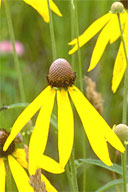
The coneflower is a given when compiling lists of popular wildflowers.
ratibida_pinnata_003__40121_std (1)
This prairie plant is beloved for its easy-going nature and long-lasting daisy-like blossoms blooms. It attracts bees, butterflies and other insects into the garden, and it's fun to watch goldfinches dangling upside down dining on seeds plucked from spent heads.
echinacea_purpurea_01__05679__05186.1336784697.1280.1280
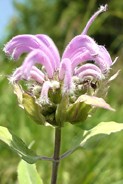
Black-eyed and brown-eyed Susans are prized, along with columbine (Aquilegia canadensis) with its cheerful red and yellow nodding blooms, wild bergamot (Monarda fistulosa) and butterfly weed (Asclepias tuberosa). New England aster (Symphyotricum novae-angliae, previously Aster novae-angliae) is among my personal favorites, and the first type of aster I ever planted. Monarchs passing through my fall garden find it a valuable source of nectar (and a landing pad to rest).
monarda_fistulosa_thumb__68632__48618.1336784699.220.220
Search out a source for high-quality seeds and plants that are suited to your growing conditions --- location, soil type, sun exposure, etc. The National Garden Bureau, which has declared 2013 the "Year of the Wildflower," also suggests tracking down fact sheets and publications geared toward your geographic region, such as the Xerces Society (www.xerces.org) and the Lady Bird Johnson Wildflower Center's extensive database that can be searched by state (www.wildflower.org). Iowa State University Extension also has good resources for wildflower information.
To create your own wildflower garden, follow these NGB suggestions:
1. Prepare the soil by removing weeds and other unwanted vegetation. If the soil is compacted, till lightly so the soil is loose and germinating seeds can put down roots. A bow rake is great for loosening the top layer of soil. Digging or roto-tilling too deep will bring up weed seeds and other plants that will need to be removed later to avoid competing with the wildflower seeds. While it may not be practical or necessary to amend the soil before planting wildflowers, you can add organic matter such as compost or well-rotted manure before planting depending on the site.
2. Wildflower seed and seed mixes can be planted in either spring or fall. Spring rains help seeds germinate and plants get established before many weeds have a chance to grow. In cold climates, a dormant seeding of wildflowers can be done in the fall when temperatures are low enough that seed will not germinate until weather warms up the following spring, similar to what happens in nature. Some seeds, especially many of our native perennial wildflower species, need a chilling period to break their dormancy. This is provided naturally by the change in temperatures from winter into spring.
3. Scatter seeds by hand or with a small spreader. Seeds can be raked into the soil or lightly covered with soil. Water thoroughly right after planting and keep seeds and seedlings moist for about 4-6 weeks. Gradually reduce watering as seedlings develop. Identify and remove weed seedlings as soon as possible since they will compete with wildflowers for water, nutrients and space. For dormant seeding, watering after planting seeds is not necessary.
Care & feeding
Annual flowers are more abundant at first because they grow and flower quickly. Perennial plants will follow and eventually become established; many annual and perennial plants may reseed themselves.
Year one: Not all seeds will germinate right away, especially perennial wildflowers. Don't be disappointed if there is no "instant" meadow. For more immediate results combine seeding wildflowers with planting a few container-grown plants. Plants will quickly get established and compete with weeds that may appear.
Identify and remove weeds when small to prevent spreading. Wildflowers may need additional water if rainfall is sparse, especially during extended heat spells. Avoid cutting flowers so they can seed and fill in the garden next year.
Year two: You'll see new plants from seed that didn't germinate the first year. Water if rainfall is inadequate, especially in spring or hot we ather. Remove weeds as they appear. As flowers become established, weeding will lessen. Fill in bare spots with seed or container-grown plants.
Year three and beyond: Minimal maintenance; remove weeds that may move in. Move plants that are too close or overcrowded and use them to fill in bare spots or sow more seeds. You may need to water if there is an extended period of heat. Fertilizing is generally not required.
In the garden setting, you can mulch around plants with compost or well-rotted manure. Mowing or cutting wildflowers to about 6 inches high will spread seeds and keep the garden looking neat. You can dig or rake the soil to regenerate a wildflower garden by improving contact between soil and seeds that have dropped to the ground.
To Purchase Native Wildflowers & Prairie Plants Visit Our Website at Ion Exchange, Inc.

Thursday, January 10, 2013

The Prairie Ecologist Article Photo of the Week A red-bellied woodpecker - January 3, 2013


By Chris Helzer/The Nature Conservancy

This photo was taken several years ago outside the house of my in-laws in eastern Nebraska.  I don't usually photograph birds, but I was there and the birds were there, and one thing led to another...


A red-bellied woodpecker pauses near a feeder during a snowstorm.  Sarpy County Nebraska Copyright Chris Helzer/The Nature Conservancy

It was snowing, but the mid-day light was still bright enough for photography.  As the snow fell, I stood in my coveralls near several bird feeders, hoping the birds would ignore me.  I had covered my camera in a plastic bag and wrapped my lens in cardboard (held on with rubber bands) - only the best technology for me!  While the snow piled up on my camera, eyebrows, and beard, I pivoted the camera around on my tripod, attempting to focus on bird after bird as they came near the feeders.  Most of the time, of course, the bird either landed in a non-photogenic spot or moved away before I could get a bead on it.  In spite of that, I eventually managed to get a few useable shots.

This one is my favorite from the day - mainly because of the completely white background.  It would look like a studio shot except for the blurry snowflakes coming past the tree trunk.  In reality, the snow on the ground and in the air behind the bird just blurred together into a pure white background.

The Prairie Ecologist

Tuesday, January 8, 2013

Earthyman Responds to a Customers Question on Advice on Planting Butterfly Milkweed : Asclepias Tuberosa Seeds


Question:  Hi.  I recently received 6 packets from you of Butterfly milkweed.  Could you provide some advice on planting?  I have a small flower garden ( full sun,) as well as 15 acres of various prairie plants and grasses. Began as all  switchgrass but I am slowly planting more and more grasses and forbs. Thanks.  Stan


Response:  Stan, you may start the seeds indoors after you have moist stratified them.  Place the seeds in a zip lock back mixed with moist vermiculite.  Leave them in a refrigerator for 30 days.  Remove and plant in open flats or small pots with sterile soil medium at a depth of 1/8th to 1/4th inch.  They must receive considerable light and warmth to adequately develop.  Once they have started to form the white root, they can be transplanted to your garden or field.  Keep the competition down from weeds and other plants.  They prefer well drained to excessively drained soils in full sun.  They do well in rocky poor soils with maximum exposure to the sun and wind.  If you want to do a dormant seeding, you may spread the seed now or anytime the ground is exposed.  Make sure your seeds are not on frozen ground as they may wash away.  Wait until the ground thaws and spread your seed but only lightly cover with a sprinkling of soil or compost no deeper than 1/8 to 1/4 inch. Nature can then freeze and thaw offering the best stratification.  Once plants are mature, you must be very careful when you attempt to transplant as the roots are very massive and at least 90% of the roots should be dug with plant and immediately transplanted.  You should start seeing blooms the second year and thereafter the plants will grow much stronger and have many blooms in the following years.  If your plants, for some reason die or disappear the following year after planting, they are probably in a poorly adaptable site for this species.

Thanks,

Howard aka "Earthyman"

"Helping You Create Your Own Natural Beauty"

Howard Bright
800-291-2143
1878 Old Mission Drive
Harpers Ferry, IA 52146

To Purchase Butterfly Milkweed Visit us at Ion Exchange, Inc. or Native Wildflowers & Seeds